The Ramakrishna Mission Ashrama, Morabadi, is preparing to celebrate its centenary year in 2027. Established in 1927 by Swami Vishudhananda Maharaj in accordance with the ideals and guidance of Swami Vivekananda, the Ashrama has long served as a cornerstone of spiritual upliftment and social service in the region.
Over the decades, the Ashrama has made significant contributions across diverse fields, including social service, agriculture, livelihood promotion, and rural development, positively impacting countless lives. With a steady expansion of its activities, a growing number of devotees, and the deteriorating condition of the existing temple structure, it has been resolved to construct a new complex to commemorate this historic milestone.
The proposed complex will include a new temple and the “Vivekananda Cultural Hall,” a multipurpose facility designed to expand the Ashrama’s outreach and enhance its service capacity. The hall will host a wide range of community-oriented activities such as Annapurnadan (community feeding), yoga classes, cultural programs, and spiritual discourses. The facility will also be open to various communities and sects, in alignment with the inclusive vision and mandates of the Ramakrishna Mission.
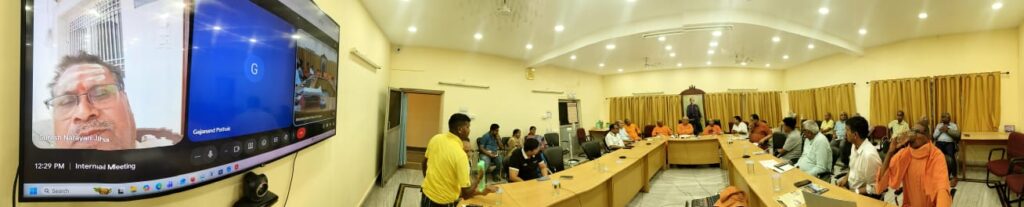
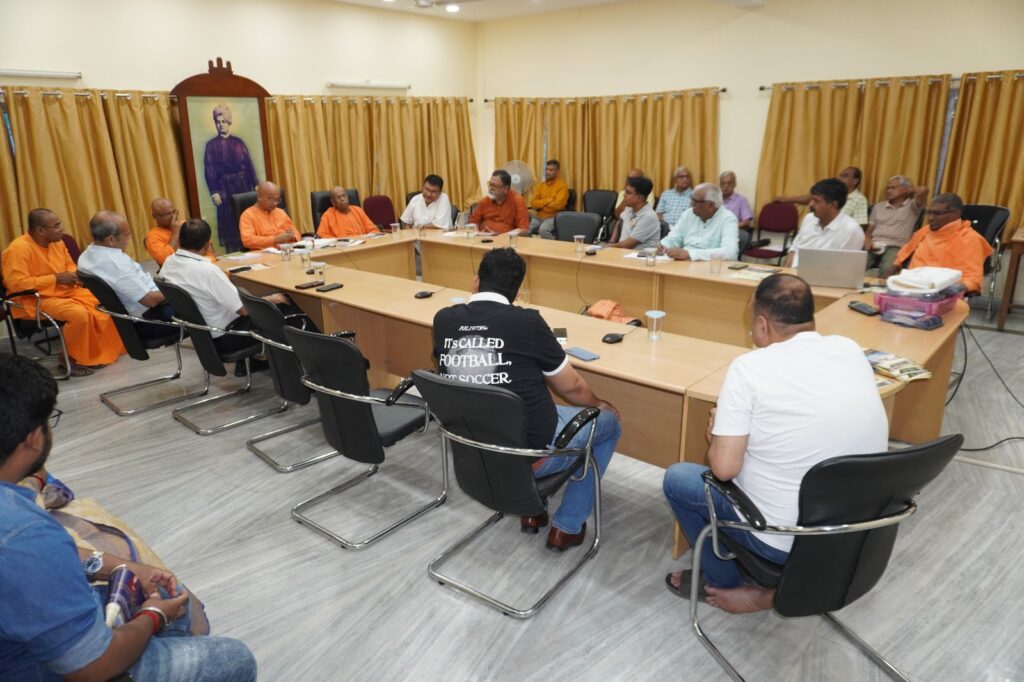
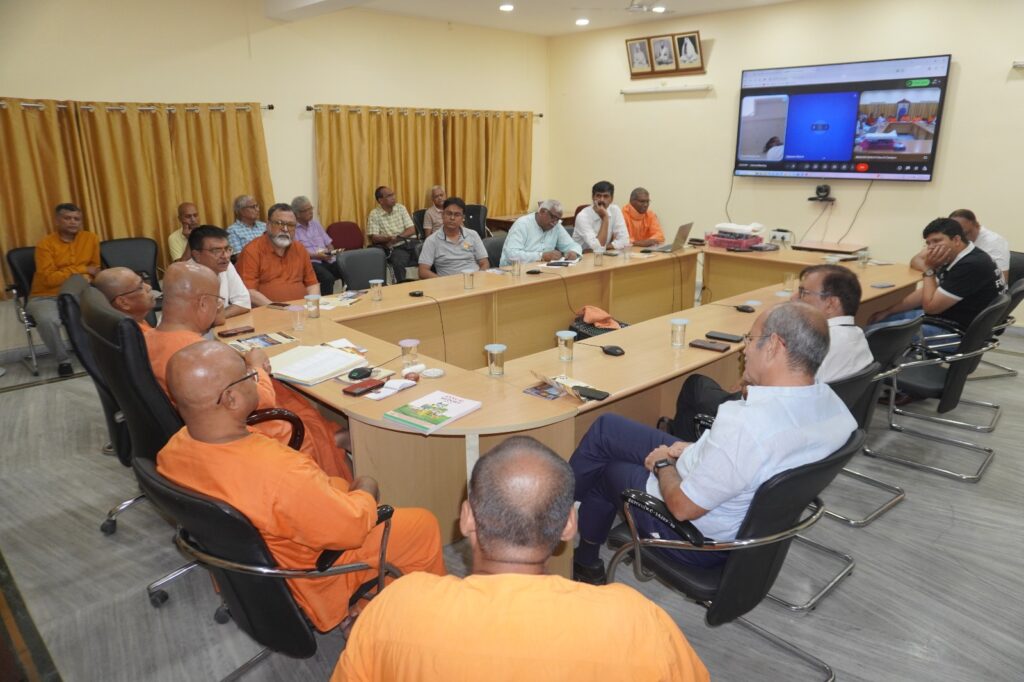
A meeting in this regard was convened on 3 May 2026 at the Ashrama premises in Ranchi. It was attended by eminent citizens, including retired government officials, business leaders, legal professionals, chartered accountants, consultants, academicians, and other distinguished members of society. Participants joined both in person and virtually.
The meeting was chaired by Swami Bhaveshananda, Secretary of the Management Committee, while Shri V. K. Gaddyal, President of the Ashrama Management Committee, joined virtually.
Following detailed deliberations, the committee, along with invitees, resolved to adopt a strategic and systematic approach to mobilize funds for the construction of the new complex, estimated to cost approximately ₹10 crore.
This meeting formed part of an ongoing strategic review and roadmap-setting process for the next phase of action. Several subcommittees have been constituted from among the Core Committee members, each tasked with reaching out to specific segments of society to raise funds. The proposed structure will house the Vivekananda Cultural Hall on the ground floor and the temple on the first floor, both designed to function independently.
Swami Bhaveshananda elaborated on the historical establishment of the Ranchi Ramakrishna Mission centre in 1927 and highlighted its remarkable journey over nearly a century. The Ashrama’s initiatives have touched millions of lives across Jharkhand, particularly among tribal youth, economically weaker rural communities, women, and children.
Working in alignment with government initiatives, the Ashrama has successfully implemented numerous development projects and support systems, creating sustainable pathways for growth. The Ranchi centre directly serves 127 villages and functions as an active implementation agency. It has also pioneered 17 fully organic villages as a pilot initiative. Divyayan Krishi Vigyan Kendra (KVK) has emerged as a leading national institution, demonstrating carbon neutrality and serving as a model for agricultural innovation and community development.
On the cultural front, the Ashrama continues to transform lives through wellness programs and value-based education. The proposed complex, comprising the Vivekananda Cultural Hall and the temple, is expected to significantly strengthen these efforts and contribute further to nation-building.
Informational handouts, brochures, and presentation materials have been developed to support outreach and fundraising efforts. These were reviewed during the meeting, and valuable feedback was received from subcommittee members to enhance communication effectiveness and refine mid-course strategies.
Emphasis was placed on inclusive fundraising through strategic outreach to all sections of society—from major donors to grassroots contributors. Various innovative approaches and contribution models were discussed to ensure participation from middle- and lower-income groups, fostering a sense of collective ownership in the development process.
A structured plan was proposed to mobilize approximately ₹5 crore over the next four to five months, while continuing broader fundraising efforts. The committees expressed strong commitment to achieving the construction targets through focused and sustained engagement.
The meeting concluded with a vote of thanks.
For further information or to contribute to this initiative, interested individuals and organizations are encouraged to contact the Ashrama office.